
Correct Walking & Running Mechanics for Pain Relief & Injury Prevention
Gait Analysis & Gait Training in Chicago, IL
Comprehensive Chiropractic & Wellness provides professional gait analysis and training at our Lincoln Square, Chicago office. Dr. Jeffrey Haynes evaluates walking and running mechanics to identify dysfunctions causing pain, then designs corrective programs that restore proper movement patterns and prevent future injuries. Call (312) 658-0658.
Comprehensive Chiropractic & Wellness provides professional gait analysis and gait training to patients throughout Chicago, Lincoln Square, North Center, and Ravenswood. Our experienced movement specialists use advanced video analysis technology and evidence-based corrective techniques to identify abnormal walking and running patterns that cause pain, increase injury risk, and limit performance.
📍 4526 N. Lincoln Ave, Chicago, IL 60625
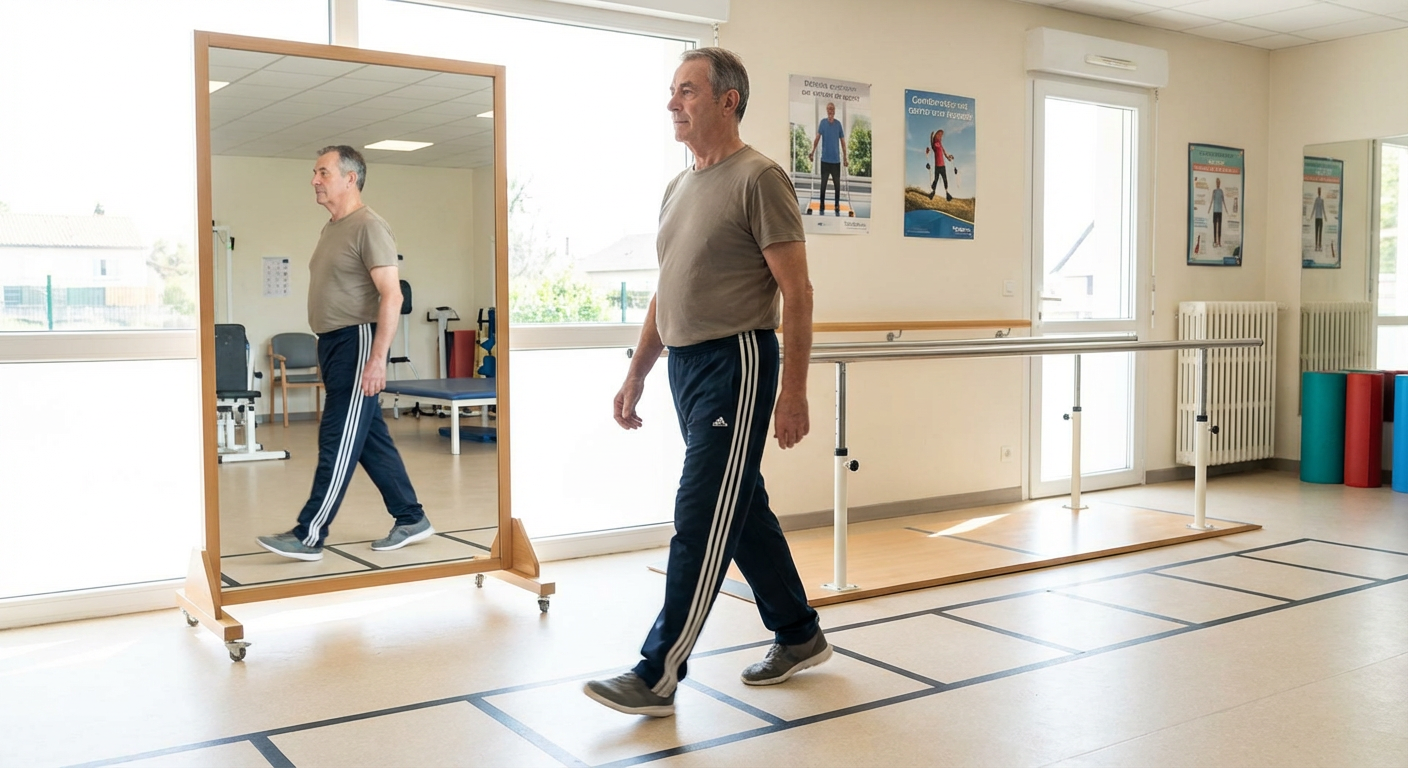
What Is Gait Training?
Gait training is the therapeutic process of analyzing how you walk or run, identifying biomechanical dysfunctions, and systematically retraining movement patterns to restore efficient, pain-free movement. Gait encompasses your entire walking or running cycle—how your foot strikes the ground, how forces transfer through your body, how your joints move, how your muscles activate, and how your body maintains balance and forward momentum.
Most people develop subtle gait abnormalities over time due to injuries, muscle imbalances, joint restrictions, pain avoidance patterns, improper footwear, or simply never learning optimal movement mechanics. These abnormal patterns become habitual and unconscious, creating repetitive stress on joints, muscles, and connective tissues that leads to pain, injury, and degenerative changes.
Gait training breaks this cycle by:
- Identifying specific biomechanical deficits through detailed movement analysis
- Addressing underlying impairments (tight muscles, weak muscles, restricted joints, poor stability)
- Teaching new movement patterns through deliberate practice and neurological retraining
- Integrating corrections into everyday walking and running
- Maintaining improvements through progressive loading and continued practice
The Gait Cycle Explained
Understanding normal gait helps you appreciate how subtle deviations create problems.
Stance Phase (60% of cycle)
Foot on ground
Initial Contact (Heel Strike) - 0-2%
- • Heel contacts ground
- • Ankle in neutral or slight dorsiflexion
- • Knee slightly flexed (5-7°) to absorb shock
- • Hip flexed about 25-30 degrees
Loading Response (Foot Flat) - 2-10%
- • Entire foot contacts ground
- • Knee flexes more (15-20°) for shock absorption
- • Body weight transfers onto stance leg
Midstance - 10-30%
- • Full body weight on stance leg
- • Body at highest point in gait cycle
- • Hip moves from flexion toward extension
Terminal Stance (Heel Off) - 30-50%
- • Heel lifts off ground, weight on forefoot
- • Ankle dorsiflexed maximally
- • Hip extends
Pre-swing (Toe Off) - 50-60%
- • Toes push off ground
- • Body weight transfers to opposite leg
Swing Phase (40% of cycle)
Foot off ground
Initial Swing - 60-73%
- • Foot clears ground
- • Knee flexes (60 degrees)
- • Ankle dorsiflexes to clear ground
Mid-swing - 73-87%
- • Leg swings forward
- • Knee begins extending
- • Hip continues flexing
Terminal Swing - 87-100%
- • Leg decelerates preparing for ground contact
- • Knee extends almost fully
- • Hip reaches maximum flexion
- • Cycle repeats
Running Gait Differences:
- • Entire cycle occurs faster (160-180+ steps/min)
- • Includes flight phase (both feet off ground)
- • Greater forces (2-3x body weight)
- • Forefoot or midfoot strike common
- • More pronounced knee flexion
Why Gait Training Matters
Millions of Steps
Average person takes 4,000-6,000 steps per day. Active individuals take 10,000+.
- • Over one year: 1.5-5 million steps
- • Over ten years: 15-50 million steps
Every step with faulty mechanics creates cumulative stress.
Kinetic Chain Effect
Your body is an interconnected system. How your foot hits the ground influences:
- • Ankle, knee, hip mechanics
- • Pelvic position and balance
- • Lumbar and thoracic spine
- • Shoulder swing and neck position
Pain Cycle
Pain creates protective adaptations that continue even after injury heals:
- • Shortened stride
- • Altered foot strike
- • Compensatory movements
- • Creating new problems
Never Learned
Unlike sports with coaching, most people never receive education about walking/running efficiently:
- • Overstriding
- • Poor cadence
- • Asymmetrical patterns
- • Insufficient hip extension
Conditions Caused or Worsened by Abnormal Gait
Knee Conditions
- • Patellofemoral pain syndrome (runner's knee)
- • Iliotibial band syndrome
- • Patellar tendinitis (jumper's knee)
- • Meniscus stress
- • Knee osteoarthritis
- • ACL stress
- • Medial and lateral knee pain
Hip Conditions
- • Hip bursitis (trochanteric bursitis)
- • Hip impingement (FAI)
- • Hip labral tears
- • Piriformis syndrome
- • Hip osteoarthritis
- • Snapping hip syndrome
- • Gluteal tendinopathy
Ankle & Foot Conditions
- • Plantar fasciitis
- • Achilles tendinitis
- • Recurrent ankle sprains
- • Shin splints
- • Stress fractures
- • Posterior tibial tendon dysfunction
- • Metatarsalgia and Morton's neuroma
Lower Back Conditions
- • Chronic lower back pain
- • Sacroiliac joint dysfunction
- • Lumbar disc degeneration
- • Muscle strains
- • Lumbar facet joint irritation
Performance Limitations
- • Running inefficiency
- • Slow running pace
- • Early fatigue
- • Reduced endurance
- • Inability to increase mileage
- • Performance plateau
Neurological Conditions
- • Post-stroke gait dysfunction
- • Parkinson's disease
- • Multiple sclerosis
- • Balance impairments
- • Aging-related gait changes
- • Diabetic neuropathy
Comprehensive Gait Analysis Process
Pre-Assessment Consultation
15-20 minutes
Health & Injury History:
- • Current pain or symptoms
- • Past injuries and treatments
- • Current training program
- • Goal setting
Static Postural Assessment
10 minutes
Front, Side & Rear Views:
- • Head and shoulder position
- • Pelvic height and rotation
- • Knee alignment
- • Foot arch height
- • Spinal alignment
Range of Motion Assessment
10-15 minutes
Joint mobility testing:
- • Hip flexion/extension/rotation
- • Knee flexion and extension
- • Ankle dorsiflexion (critical)
- • Spine mobility
Muscle Strength Assessment
10-15 minutes
Strength testing:
- • Hip abductors (glute medius)
- • Hip extensors (glutes)
- • Quadriceps and hamstrings
- • Calf and ankle strength
- • Core stability
Video Gait Analysis
20-30 minutes
The centerpiece of assessment:
- • Front, side, and rear views
- • High-speed recording (120-240 fps)
- • Frame-by-frame analysis
- • Walking and running analysis
Biomechanical Diagnosis
15-20 minutes
Analysis & findings review:
- • Primary dysfunction identification
- • Contributing factors
- • Impact analysis
- • Treatment plan development
Specific Elements Analyzed During Video Assessment
Foot Strike Pattern
- • Rearfoot/midfoot/forefoot strike
- • Landing position
- • Angle at contact
- • Impact forces
Pronation/Supination
- • Degree of foot rolling
- • Speed of pronation
- • Timing in gait cycle
- • Normal vs excessive
Stride Characteristics
- • Stride and step length
- • Cadence (steps/min)
- • Ground contact time
- • Left vs right symmetry
Joint Positions
- • Knee flexion and alignment
- • Hip extension and drop
- • Pelvic rotation and tilt
- • Thoracic rotation
Gait Retraining Program Structure
1Phase 1: Foundation (Weeks 1-3)
Goals:
- • Address mobility restrictions
- • Activate weak/inhibited muscles
- • Establish proprioceptive awareness
- • Introduce basic gait modifications
Focus Areas:
- • Hip flexor stretching and mobilization
- • Glute activation exercises
- • Single-leg balance drills
- • Cadence training
Frequency: 2 sessions per week
2Phase 2: Integration (Weeks 4-8)
Goals:
- • Integrate new patterns into unconscious gait
- • Progress strengthening program
- • Address sport-specific demands
- • Refine technique with increased loading
Focus Areas:
- • Advanced gait drills
- • Loaded single-leg exercises
- • Plyometric training introduction
- • Running volume management
Frequency: 1-2 sessions per week
3Phase 3: Automation (Weeks 9-16)
Goals:
- • Make new patterns automatic and unconscious
- • Handle high training loads with good mechanics
- • Maintain improvements independently
- • Return to full sport/activity participation
Progress Markers:
- • New pattern maintained without conscious thought
- • Pain-free during full activity load
- • Performance improvements
- • Symmetrical movement patterns
Frequency: Every 2-4 weeks
4Phase 4: Maintenance (Ongoing)
Goals:
- • Prevent regression to old patterns
- • Continue performance improvement
- • Adapt to changing training demands
- • Address new issues proactively
Focus:
- • Periodic video analysis
- • Technique tune-ups
- • Program advancement
- • Performance optimization
Frequency: Monthly or as-needed
Specific Gait Training Interventions
Gait Training for Specific Conditions
Runner's Knee (Patellofemoral Pain)
Gait Dysfunctions:
- • Knee valgus (inward collapse)
- • Overpronation
- • Overstriding
- • Weak hip abductors
Retraining Priorities:
- • Hip strengthening (glute medius focus)
- • Knee tracking correction
- • Cadence increase
Weeks 1-4: Hip strengthening, no running | Weeks 5-8: Gradual return with technique focus
Plantar Fasciitis
Gait Dysfunctions:
- • Overpronation
- • Limited ankle dorsiflexion
- • Tight calves
- • Overstriding
Retraining Priorities:
- • Ankle mobility restoration
- • Foot intrinsic strengthening
- • Calf flexibility
- • Possible orthotics
Weeks 1-6: Mobility and strengthening | Weeks 7-10: Gradual return with modifications
IT Band Syndrome
Gait Dysfunctions:
- • Hip adduction during stance
- • Weak hip abductors
- • Crossover gait pattern
Retraining Priorities:
- • Hip abductor strengthening
- • Single-leg stability
- • Eliminate crossover gait
- • Wider stride base
Weeks 1-4: Intensive hip strengthening | Weeks 5-8: Return to flat surfaces
Achilles Tendinopathy
Gait Dysfunctions:
- • Overpronation
- • Heel striking with excessive dorsiflexion
- • Weak calves
Retraining Priorities:
- • Gradual transition toward midfoot strike
- • Eccentric calf program
- • Address overpronation
Weeks 1-8: Eccentric calf program | Weeks 9-12: Very gradual running return
Chronic Lower Back Pain
Gait Dysfunctions:
- • Limited hip extension
- • Excessive lumbar extension
- • Poor pelvic control
Retraining Priorities:
- • Restore hip extension mobility
- • Core stability training
- • Thoracic mobility
- • Symmetrical gait
Weeks 1-6: Hip flexor mobility, glute work | Weeks 7-12: Integration into running
Post-Ankle Sprain (Chronic Instability)
Gait Dysfunctions:
- • Reduced ankle dorsiflexion
- • Poor proprioception
- • Altered foot strike
Retraining Priorities:
- • Proprioception training
- • Ankle strengthening
- • Restore normal foot strike
- • Single-leg stability
Weeks 1-4: Proprioception and strength | Weeks 5-8: Gait normalization
Gait Training Technology & Tools We Use
High-Speed Video Analysis
120-240 fps recording with frame-by-frame analysis, angle measurement, and overlay comparison from multiple views.
Treadmill Analysis
Controlled environment with consistent surface, multiple angles, speed control, and safety during detailed assessment.
Force Plate
Measures ground reaction forces, loading rates, and asymmetries for objective quantification of impact.
Pressure Mat/Insole Sensors
Identifies foot pressure distribution, pronation timing, and specific areas of excessive pressure.
Wearable Technology
GPS watches with vertical oscillation, ground contact time, cadence, and stride length metrics.
Training Equipment
Resistance bands, balance boards, stability balls for strengthening, activation, and proprioception training.
Benefits of Professional Gait Training
Injury Prevention
- • Reduced overuse injury risk
- • Lower impact forces
- • Balanced loading
- • Early problem identification
Pain Relief
- • Reduced chronic pain
- • Decreased acute flares
- • Lower medication dependence
- • Improved daily function
Performance
- • Faster running pace
- • Improved endurance
- • Better running economy
- • Increased training capacity
Long-Term Health
- • Reduced arthritis progression
- • Maintained independence
- • Lower disability risk
- • Better overall health
Gait Training Safety & Considerations
Excellent Candidates
- • Runners with recurrent injuries
- • Athletes seeking performance improvement
- • Individuals with chronic pain from gait dysfunction
- • Post-injury rehabilitation patients
- • People with movement limitations from arthritis
- • Individuals with balance problems
- • Anyone wanting injury prevention
Requires Medical Clearance
- • Recent surgery
- • Acute injuries (currently inflamed)
- • Cardiovascular conditions
- • Uncontrolled diabetes
- • Severe osteoporosis
- • Neurological conditions (stroke, MS, Parkinson's)
- • Pregnant individuals (can participate with modifications)
Safe Progression Principles
- • Change one variable at a time
- • Allow 3-4 weeks minimum for adaptation
- • Build strength before changing mechanics under load
- • Reduce training volume when making technique changes
- • Listen to your body - pain is a warning sign
- • Consistent practice (small amounts frequently)
Warning Signs - Stop & Contact Us
- • Sharp pain during or after activity
- • Swelling in joints
- • Pain that worsens over multiple sessions
- • Numbness or tingling
- • Severe muscle soreness lasting >3 days
- • Inability to perform normal daily activities
Frequently Asked Questions About Gait Training
Why Choose Comprehensive Chiropractic & Wellness for Gait Training
Advanced Video Analysis
High-speed recording (120-240 fps) with frame-by-frame analysis, angle measurement, and objective documentation of your gait from multiple angles.
Experienced Movement Specialists
Our clinicians have advanced training in biomechanics, gait analysis, and corrective exercise prescription for runners and walkers of all levels.
Individualized Approach
Every program is customized based on your specific dysfunctions, goals, activity level, and response to treatment—not one-size-fits-all protocols.
Integrated Treatment
Gait training is combined with chiropractic adjustments, soft tissue work, and strength training for comprehensive care addressing all contributing factors.
Evidence-Based Methods
Treatment decisions based on current research, clinical experience, and proven outcomes—not trends or outdated methods.
Patient Education
You'll understand what's being corrected, why specific drills are used, what you should feel, and how to maintain improvements independently.
Gait Training Near You
Ready to Start Your
Wellness Journey?
Take the first step toward better health. Contact us today to schedule your consultation or learn more about our services.
Visit Us
4526 N. Lincoln Ave,
Chicago, IL, 60625
Call Us
(312) 658-0658
Mon-Fri, 10am-7pm
Email Us
DrJeffreyHaynes@gmail.com
We respond within 24 hours
Hours
Mon-Thu: 10am-7pm, Fri: 10am-5pm
Sat: By Appointment
Book an Appointment
Schedule your visit using the form below.