Deep Tissue Techniques Chicago
Comprehensive Chiropractic & Wellness provides therapeutic deep tissue massage at our Lincoln Square, Chicago office. Dr. Jeffrey Haynes combines targeted soft tissue therapy with chiropractic care to release chronic muscle tension, break up adhesions, reduce inflammation, and accelerate recovery from injuries and chronic pain conditions. Call (312) 658-0658.
Instrument-Assisted Deep Soft Tissue Work for Pain Relief & Muscle Tension in Lincoln Square
Comprehensive Chiropractic & Wellness provides professional deep tissue soft tissue techniques to patients throughout Chicago, Lincoln Square, North Center, and Ravenswood. We use advanced instrument-assisted techniques like Gua Sha and IASTM to relieve chronic muscle tension, break up scar tissue, reduce pain, improve mobility, and accelerate recovery from injuries.
What Are Deep Tissue Techniques?
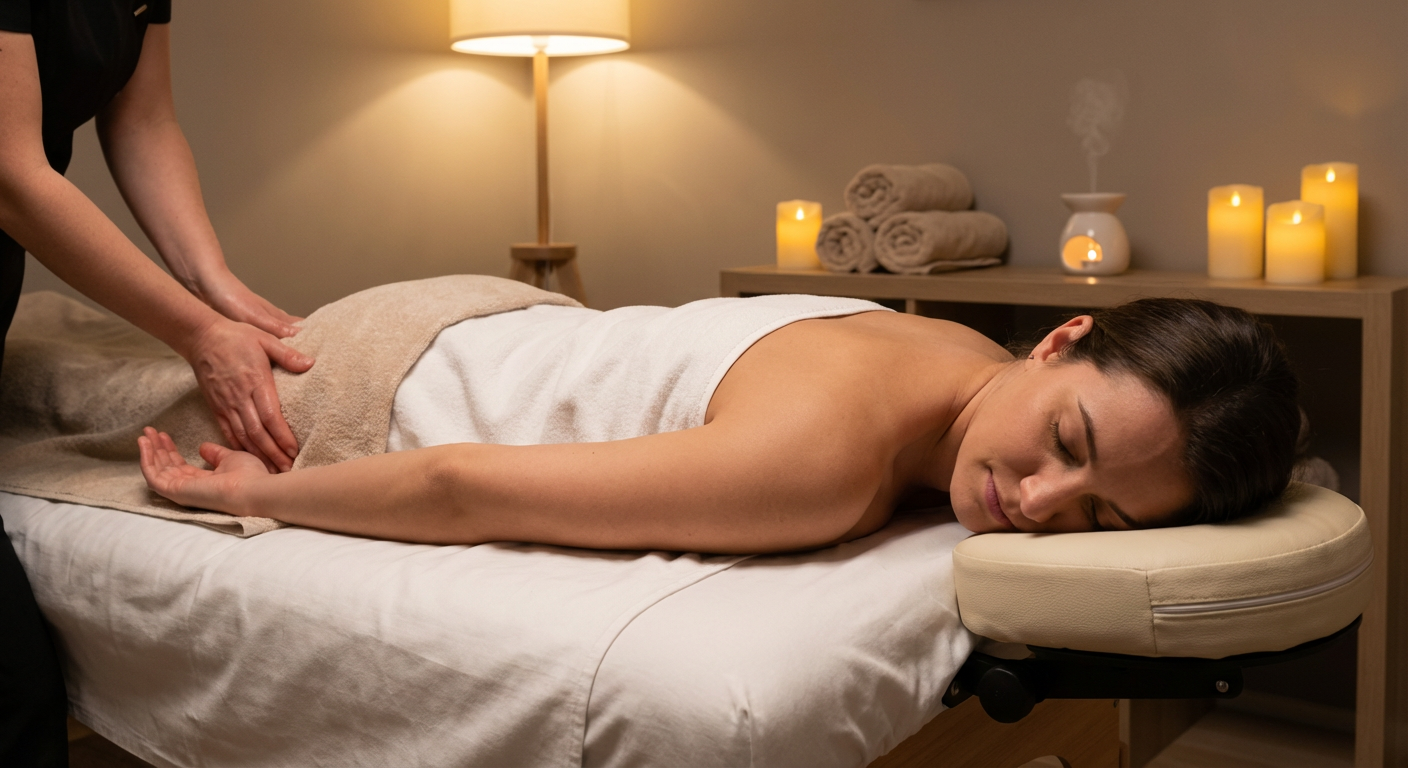
Deep tissue techniques are specialized therapeutic approaches that use slow, deliberate pressure and instrument-assisted methods to reach muscle layers beneath the superficial muscles. Unlike relaxation massage (Swedish massage), deep tissue work targets chronic muscle tension, adhesions (knots), scar tissue, and restricted fascia that contribute to pain and limited movement.
We apply focused pressure along muscle fibers, across muscle fibers, and around joints using both hands-on techniques and specialized instruments like Gua Sha tools. This releases chronic holding patterns, restores normal muscle length, improves blood flow, and reduces pain. The approach is both therapeutic and corrective, addressing the underlying causes of muscle dysfunction rather than providing temporary relaxation.
How Deep Tissue Techniques Work
Deep tissue techniques produce therapeutic effects through several mechanisms:
Mechanical Effects
- Breaks Up Adhesions - Pressure breaks cross-linked collagen fibers that form knots and scar tissue
- Releases Trigger Points - Sustained pressure deactivates hypersensitive muscle nodules
- Lengthens Shortened Muscles - Stretching during massage restores normal muscle length
- Mobilizes Fascia - Manipulation of connective tissue layers reduces restrictions
- Increases Range of Motion - Releasing tight muscles allows joints to move freely
Circulatory Effects
- Flushes Metabolic Waste - Compression pumps out lactic acid and inflammatory chemicals
- Increases Blood Flow - Enhanced circulation delivers oxygen and nutrients to tissues
- Reduces Swelling - Improved lymphatic drainage removes excess fluid
- Promotes Healing - Better circulation accelerates tissue repair
Neurological Effects
- Decreases Pain Signals - Pressure stimulates mechanoreceptors that inhibit pain transmission
- Resets Muscle Tension - Manipulation affects muscle spindles and Golgi tendon organs
- Releases Endorphins - Natural pain-relieving chemicals provide systemic relief
- Calms Nervous System - Parasympathetic activation reduces stress and muscle guarding
Biochemical Effects
- Reduces Inflammation - Massage decreases inflammatory cytokines
- Lowers Cortisol - Stress hormone reduction promotes healing
- Increases Serotonin - Mood-enhancing neurotransmitter improves wellbeing
- Releases Oxytocin - "Feel-good" hormone contributes to pain relief
Deep Tissue vs. Swedish Massage
Understanding the differences helps you choose the right approach for your needs.
Swedish Massage
Deep Tissue Massage
Conditions Treated with Deep Tissue Massage
Our Chicago massage therapists use deep tissue techniques to treat:
Chronic Pain
- • Chronic lower back pain
- • Chronic neck pain
- • Chronic shoulder pain
- • Chronic hip pain
- • Fibromyalgia
- • Chronic tension headaches
- • Chronic muscle tension
- • Myofascial pain syndrome
Muscle Conditions
- • Muscle knots (myofascial trigger points)
- • Muscle strains and tears (during healing phase)
- • Muscle imbalances
- • Shortened/tight muscles
- • Muscle spasms
- • Delayed onset muscle soreness (DOMS)
- • Muscle adhesions
Sports Injuries
- • Hamstring strains
- • Quadriceps strains
- • Calf strains
- • Rotator cuff injuries (post-acute)
- • Tennis elbow
- • Golfer's elbow
- • Runner's knee (IT band syndrome)
- • Shin splints
- • Plantar fasciitis
Postural Problems
- • Forward head posture (tech neck)
- • Rounded shoulders
- • Anterior pelvic tilt
- • Upper crossed syndrome
- • Lower crossed syndrome
- • Desk worker syndrome
Injury Recovery
- • Auto accident injuries (whiplash)
- • Work-related injuries (repetitive strain)
- • Post-surgical scar tissue
- • Adhesive capsulitis (frozen shoulder)
- • Old injuries with lingering dysfunction
Movement Restrictions
- • Limited shoulder range of motion
- • Limited hip mobility
- • Limited spinal rotation
- • Reduced ankle mobility
- • Joint stiffness
- • Difficulty with overhead movements
Nerve-Related
- • Sciatica (from piriformis syndrome)
- • Thoracic outlet syndrome
- • Carpal tunnel syndrome
- • Nerve impingement from muscle tension
Stress-Related
- • Tension headaches
- • TMJ dysfunction
- • Stress-induced muscle guarding
- • Bruxism related muscle pain
- • Anxiety-related muscle tension
Deep Tissue Techniques We Use
We employ multiple deep tissue techniques, selecting and combining approaches based on your specific condition and therapeutic goals.
Myofascial Release
Sustained pressure applied to fascial restrictions (connective tissue) to release adhesions and restore normal tissue mobility.
How it works:
- Identifies areas where fascia is stuck or restricted
- Applies gentle, sustained pressure (often held 90+ seconds)
- Uses minimal or no oil to "grip" tissue
- Follows tissue release rather than forcing it
- Works layer by layer from superficial to deep
Best for:
- Fascial restrictions
- Chronic holding patterns
- Postural dysfunction
- Fibromyalgia
- Areas with old injuries
What you'll feel: Sustained pressure that may create intense sensation, sometimes described as "good hurt"; tissue often releases with feeling of warmth or melting.
Trigger Point Therapy
Focused, sustained pressure applied directly to hyperirritable muscle nodules (trigger points) to deactivate them and reduce referred pain.
How it works:
- Identifies active trigger points (tender spots that refer pain)
- Applies direct pressure to point (8-12 seconds initially)
- Pressure interrupts trigger point's pain-spasm cycle
- May use static pressure, stripping, or pressure-release technique
- Often combined with stretching
Best for:
- Referred pain patterns
- Headaches originating from muscle tension
- Sciatica from piriformis syndrome
- Chronic neck/shoulder pain
- TMJ dysfunction
What you'll feel: Initial discomfort when trigger point is pressed; may reproduce your familiar pain pattern (referred pain); intensity typically decreases as trigger point releases.
Cross-Fiber Friction
Deep pressure applied perpendicular to muscle fiber direction to break up adhesions, increase circulation, and restore normal tissue texture.
How it works:
- Identifies direction of muscle fibers
- Applies pressure across (perpendicular to) fibers
- Creates controlled microtrauma that triggers healing response
- Breaks up cross-linked collagen in scar tissue
- Restores normal fiber alignment
Best for:
- Scar tissue from old injuries
- Tendinitis (after acute phase)
- Muscle strains during healing
- Areas with chronic adhesions
- Post-surgical adhesions
What you'll feel: Intense, focused pressure moving back and forth across muscle; temporarily uncomfortable but should remain tolerable.
Stripping (Longitudinal Strokes)
Deep, slow pressure applied along the length of muscle fibers from origin to insertion to release tension and restore normal muscle length.
How it works:
- Follows muscle fiber direction
- Uses thumb, knuckles, or elbow for deep penetration
- Slow speed (2-3 inches per second) allows deep tissue response
- Addresses entire muscle length rather than isolated spots
- Often repeated multiple passes with increasing depth
Best for:
- Chronically shortened muscles
- Muscle strains (healing phase)
- Restricted range of motion
- Muscle imbalances
- Athletes with overused muscles
What you'll feel: Strong, gliding pressure moving slowly along muscle; intense but should not be sharp or unbearable.
Pin and Stretch
Technique combining sustained pressure on muscle with active or passive movement to lengthen tissue while releasing adhesions.
How it works:
- Pressure is applied to specific point in muscle
- While maintaining pressure, muscle is lengthened (you move or practitioner moves you)
- Combines benefits of pressure release and stretching
- Addresses muscle and fascial restrictions simultaneously
Best for:
- Limited range of motion
- Muscles that won't lengthen with stretching alone
- Fascial restrictions
- Athletes needing improved flexibility
- Chronic muscle shortening
What you'll feel: Pressure plus stretching sensation; intense but productive.
Active Release Technique (ART)
Patented technique combining precisely directed tension with specific patient movements to treat muscles, tendons, ligaments, fascia, and nerves.
How it works:
- Locates tissue texture abnormality
- Applies tension while you actively move through range of motion
- Tension plus movement releases adhesions
- Very specific contact points and movement patterns for each muscle
Best for:
- Sports injuries
- Repetitive strain injuries
- Nerve entrapments from soft tissue
- Headaches
- Back pain
- Carpal tunnel syndrome
What you'll feel: Hands providing resistance while you move; controlled discomfort that shouldn't exceed 7/10 intensity.
Instrument-Assisted Soft Tissue Mobilization (IASTM)
Use of specially designed metal or plastic tools to detect and treat soft tissue restrictions, adhesions, and scar tissue.
How it works:
- Tools amplify sense of tissue texture
- Controlled micro-trauma stimulates healing response
- Breaks up fascial restrictions and scar tissue
- Increases blood flow to treated area
Best for:
- Scar tissue
- Chronic tendinopathies
- Fascial restrictions
- Old injuries with lingering dysfunction
- Plantar fasciitis
- IT band syndrome
What you'll feel: Scraping sensation; may be temporarily uncomfortable; skin may turn red (normal response).
Benefits of Deep Tissue Techniques
Patients receiving deep tissue treatment at our Chicago clinic experience:
Pain Relief Benefits
- Reduced chronic muscle pain
- Decreased headache frequency and intensity
- Lower back pain relief
- Neck and shoulder pain reduction
- Reduced referred pain from trigger points
- Decreased need for pain medication
Mobility Benefits
- Increased range of motion
- Improved flexibility
- Better joint mobility
- Easier movement patterns
- Reduced stiffness
- Enhanced functional movement
Muscle Function Benefits
- Reduced muscle tension and spasm
- Improved muscle length
- Decreased muscle knots and adhesions
- Better muscle coordination
- Enhanced muscle recovery after exercise
- Restored normal muscle texture
Injury Recovery Benefits
- Faster healing from strains and sprains
- Improved scar tissue mobility
- Reduced adhesion formation
- Better post-surgical recovery
- Prevention of chronic dysfunction
- Restored normal movement patterns
Athletic Performance
- Enhanced recovery between training sessions
- Reduced risk of overuse injuries
- Improved muscle efficiency
- Better flexibility for performance
- Maintained tissue quality despite training stress
Stress & Mental Health
- Reduced stress and anxiety
- Improved sleep quality
- Lower cortisol levels
- Increased serotonin and dopamine
- Better stress coping
- Enhanced sense of wellbeing
Deep Tissue Treatment Safety & Precautions
Deep tissue treatment is generally safe for most people, but certain conditions require modifications or avoidance.
Absolute Contraindications
- • Active infections (systemic or local)
- • Fever
- • Acute injuries (first 48-72 hours)
- • Bleeding disorders or blood thinners (without physician approval)
- • Deep vein thrombosis (DVT) or blood clots
- • Open wounds or skin infections
- • Severe osteoporosis
- • Uncontrolled hypertension
- • Recent surgery (without surgeon clearance)
- • Active cancer (without oncologist approval)
Local Contraindications
- • Varicose veins
- • Bruises or recent trauma
- • Rashes or skin conditions
- • Sunburn
- • Inflamed joints
- • Hernias
- • Tumors or cysts
- • Unhealed fractures
Require Physician Approval
- • Pregnancy (especially first trimester)
- • Cancer (current or history)
- • Cardiovascular conditions
- • Osteoporosis
- • Herniated discs
- • Autoimmune conditions
Normal Side Effects
- • Muscle soreness 24-48 hours (like after exercise)
- • Mild fatigue
- • Increased thirst
- • Temporary headache (rare)
- • Light bruising (especially with IASTM)
- • Emotional release
These are temporary and indicate therapeutic work occurred.
Deep Tissue Treatment Plans
All treatment plans are customized based on your condition, response to treatment, and goals.
Acute Injury Recovery Plan
3-6 weeks
1-2 times per week
60 minutes
Pain reduction, scar tissue prevention, restore normal movement
Muscle strains, sprains, whiplash, acute back pain
Significant improvement within 4-6 sessions
Chronic Pain Management Plan
8-12 weeks initially, then maintenance
Weekly for 4 weeks, then bi-weekly, then monthly
60-90 minutes
Break pain-tension cycle, release chronic holding patterns
Chronic back/neck pain, fibromyalgia, chronic headaches
Noticeable improvement 4-6 weeks; significant change 8-12 weeks
Athletic Performance Plan
Ongoing (seasonal or year-round)
Every 2-4 weeks during training
60-90 minutes
Maintain tissue quality, prevent overuse injuries, enhance recovery
Athletes in regular training, fitness enthusiasts
Reduced injury risk, faster recovery, maintained performance
Postural Correction Plan
8-16 weeks
Weekly for 6-8 weeks, then bi-weekly
60 minutes
Release chronically shortened muscles, address imbalances
Desk workers, tech neck, rounded shoulders
Improved posture 6-8 weeks; lasting change with exercise
Post-Surgical Rehabilitation Plan
6-12 weeks
Weekly initially, then bi-weekly
30-60 minutes
Reduce scar tissue, restore mobility, address compensations
Post-surgical patients cleared by surgeon
Improved scar mobility, better range of motion
Stress & Tension Relief Plan
Ongoing maintenance
Every 2-4 weeks
60 minutes
Reduce stress-related muscle tension, promote relaxation
High-stress occupations, anxiety, tension headaches
Reduced muscle tension, improved stress resilience
Deep Tissue Techniques for Specific Conditions
Chronic Lower Back Pain
Common causes we address:
- • Tight hip flexors (psoas, iliacus)
- • Trigger points in quadratus lumborum
- • Gluteal muscle dysfunction
- • Erector spinae tension
- • IT band restrictions
Treatment approach:
- • Release hip flexors (often primary culprit)
- • Deactivate QL and gluteal trigger points
- • Strip erector spinae muscles
- • Myofascial release of thoracolumbar fascia
Timeline: Some relief after first session; significant change after 8-12 sessions (with exercise)
Critical addition: Core strengthening and hip flexibility exercises
Chronic Neck & Shoulder Pain
Common causes we address:
- • Upper trapezius trigger points
- • Levator scapulae tightness
- • Scalene muscle restrictions
- • Pectoral muscle shortening
- • Suboccipital muscle tension
Treatment approach:
- • Deactivate upper trap and levator scap trigger points
- • Release scalenes
- • Lengthen shortened pectorals
- • Work suboccipitals
Timeline: Headache relief often immediate; lasting change after 6-10 sessions
Critical addition: Postural exercise, ergonomic changes, regular breaks
Sciatica (From Piriformis Syndrome)
Common causes we address:
- • Piriformis muscle tension
- • Gluteal trigger points
- • Hip rotator restrictions
- • Lumbar muscle compensations
- • Hamstring tension
Treatment approach:
- • Deep, sustained pressure on piriformis
- • Trigger point therapy in gluteals
- • Pin-and-stretch techniques for hip rotators
Timeline: Some symptom relief after 1-2 sessions; resolution after 8-12 sessions (if muscular)
Critical addition: True sciatica from disc herniation requires chiropractic/medical evaluation
Tension Headaches
Common causes we address:
- • Upper trapezius trigger points
- • Suboccipital muscle tension
- • Temporalis and masseter muscles
- • SCM restrictions
- • Levator scapulae trigger points
Treatment approach:
- • Deactivate upper trap trigger points
- • Release suboccipital muscles
- • Work jaw muscles
- • Release SCM and scalenes
Timeline: Immediate relief common; significant improvement after 6-8 sessions
Critical addition: Stress management, ergonomic improvements, adequate hydration
Self-Care Between Deep Tissue Sessions
Maximize your treatment benefits with these between-session practices:
Hydration
Why: Massage releases metabolic waste; water helps flush it out
How: Extra 16-32 oz daily, especially 24 hours post-massage
Stretching
Why: Maintains muscle length gained during massage
How: Daily, especially within 24-48 hours post-massage
Foam Rolling
Why: Self-myofascial release between professional sessions
How: Daily or every other day; pause on tender spots 30-60 seconds
Heat Application
Why: Increases blood flow, relaxes muscles
How: Before stretching; warm heating pad 15-20 minutes
Movement
Why: Prevents re-tightening; maintains gains
How: Walking, swimming, gentle yoga 20-30 minutes daily
Stress Management
Why: Stress causes muscle tension
How: Deep breathing, meditation, adequate sleep 10-15 minutes daily
Frequently Asked Questions About Deep Tissue Techniques
Why Choose Comprehensive Chiropractic & Wellness for Deep Tissue Techniques
Experience the difference of therapeutic, results-oriented soft tissue therapy.
Advanced Training in Soft Tissue Techniques
Extensive training in deep tissue techniques, trigger point therapy, myofascial release, instrument-assisted soft tissue mobilization (IASTM), and Gua Sha.
Integrated Treatment Approach
Deep tissue techniques strategically combined with chiropractic adjustments, corrective exercise, and nutritional support.
Customized Treatment Plans
Every treatment plan individualized based on your specific condition, response to treatment, and goals.
Therapeutic Focus
We specialize in therapeutic, results-oriented soft tissue work for pain relief and injury recovery - not spa-style relaxation.
Communication & Education
You'll understand what's being treated, why specific techniques are used, and what to do between sessions.
Proper Pressure Application
Trained to work at therapeutic depth while maintaining comfort. We use 0-10 scaling and frequent check-ins.
Multiple Technique Options
Various deep tissue approaches selecting what's most effective for your condition.
Evidence-Based Practice
Treatment decisions based on current research, clinical experience, and proven outcomes.
Chiropractic Integration
Soft tissue work and chiropractic adjustments coordinated for comprehensive, effective treatment.
Convenient Chicago Location
Easy-to-reach Lincoln Square location with flexible scheduling.
Deep Tissue Massage Near You
Ready to Start Your
Wellness Journey?
Take the first step toward better health. Contact us today to schedule your consultation or learn more about our services.
Visit Us
4526 N. Lincoln Ave,
Chicago, IL, 60625
Call Us
(312) 658-0658
Mon-Fri, 10am-7pm
Email Us
DrJeffreyHaynes@gmail.com
We respond within 24 hours
Hours
Mon-Thu: 10am-7pm, Fri: 10am-5pm
Sat: By Appointment
Book an Appointment
Schedule your visit using the form below.